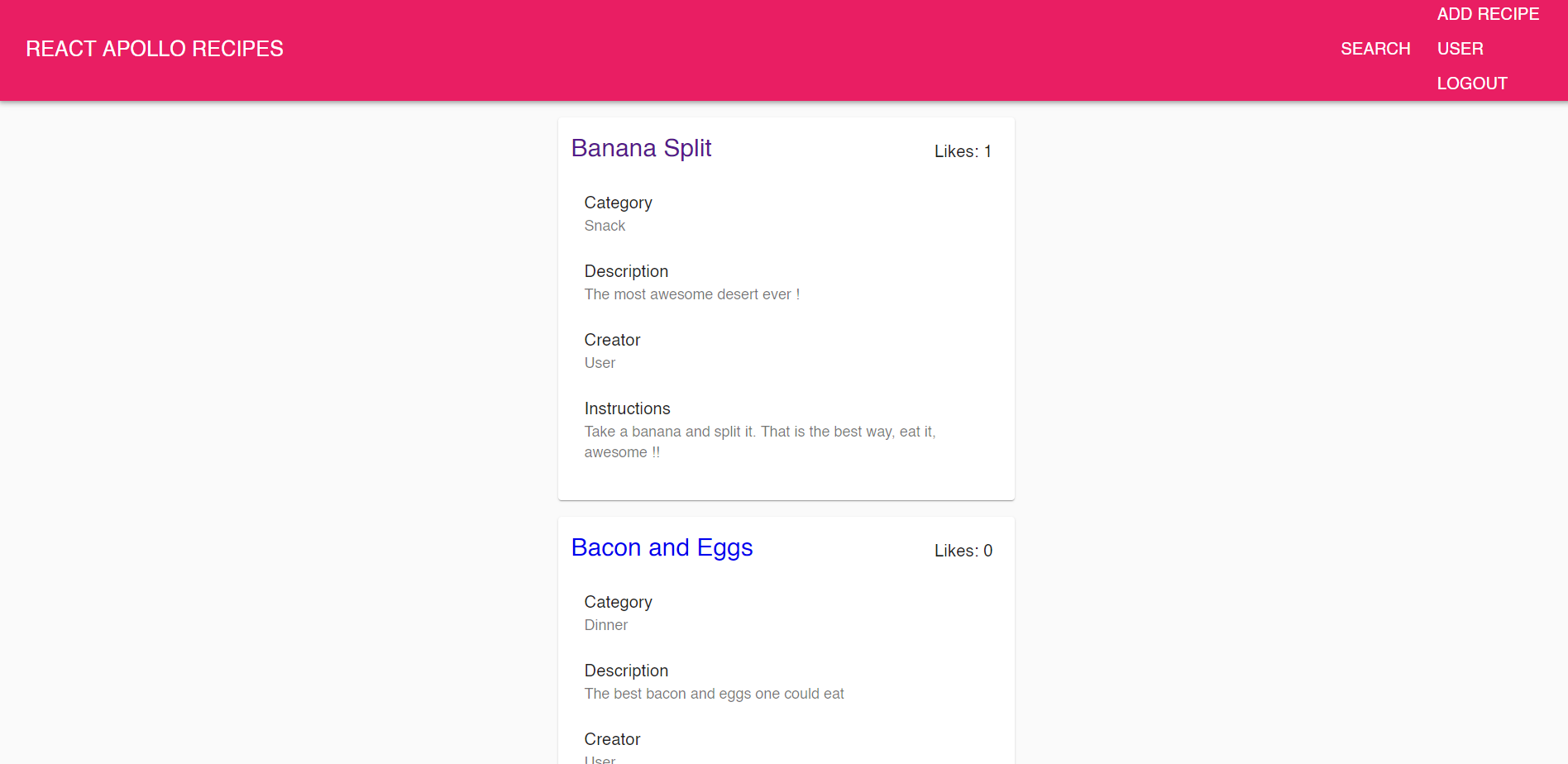
Overview
React Apollo Recipes is a full-stack GraphQL application that showcases the Apollo ecosystem end-to-end. The server runs Apollo Server on Express with MongoDB for data persistence, while the client is a React application using Apollo Client with Material UI for the interface.
The application emphasizes two key architectural patterns: optimistic UI updates — where the interface reflects user actions immediately before the server confirms — and comprehensive testing using React Testing Library for all component interactions. Users can register, create recipes, browse with live search, and like recipes from other users.
Key Features
- Optimistic UI: All mutations update the interface immediately — the UI reconciles when the server confirms, providing a snappy experience
- Live search: Real-time filtering of recipes as the user types
- JWT authentication: User registration and login with token-based session management
- Recipe CRUD: Full create, read, update, and delete operations on recipes via GraphQL mutations
- Social likes: Users can like recipes from other community members
- Component testing: Emphasis on React Testing Library for testing UI behavior from the user's perspective
Architecture
A client + server split communicating exclusively through GraphQL:
| Service | Role |
|---|---|
| client (React) | Apollo Client, Material UI, React Testing Library |
| server (Node) | Apollo Server, Express, MongoDB (Mongoose) |
| MongoDB | Document database for recipes and users |
The client runs on port 8006, the server on port 8005. Nginx serves as a reverse proxy in production.
Data Flow
User creates recipe → Apollo Client mutation → Optimistic update (UI refreshes immediately)
                                                       ↓
                                              Apollo Server → Mongoose → MongoDB
                                                       ↓
                                              Server response → Apollo Client reconciles UI
The optimistic response pattern means recipes appear instantly in the list — no loading spinners for mutations.
Tech Stack
| Layer | Technology |
|---|---|
| Frontend | React, Apollo Client, Material UI |
| API | Apollo Server, Express, GraphQL |
| Database | MongoDB (Mongoose ODM) |
| Authentication | JWT (JSON Web Tokens) with refresh helpers |
| Testing | React Testing Library, Jest |
| Deployment | Nginx reverse proxy, AWS EC2 |