Overview
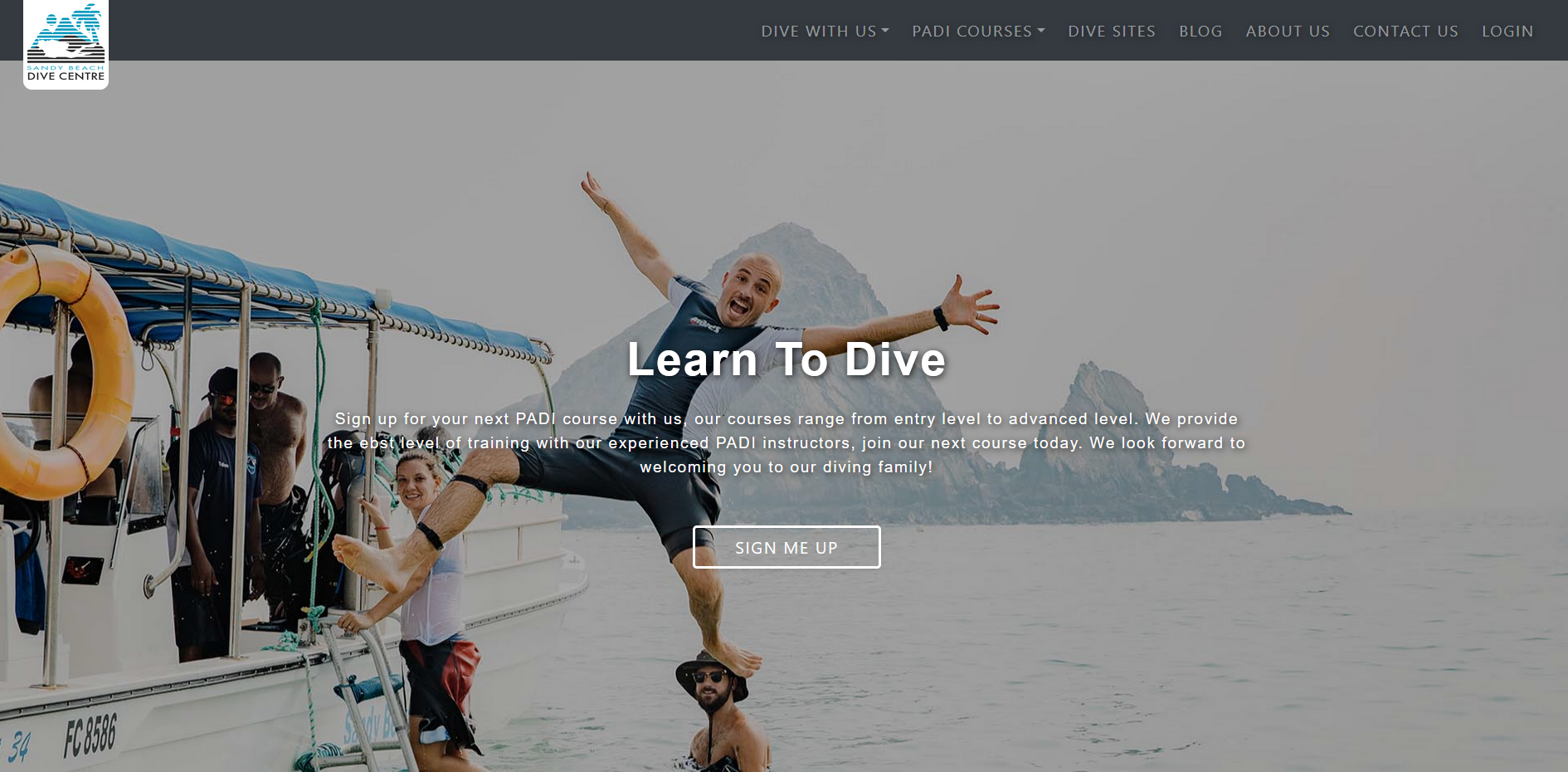
Dive Sandy Beach (Flask) is a Python-based informational website for Sandy Beach Dive Centre in Fujairah, UAE. The application provides a public-facing blog platform, PADI course management, and dive site listings, all delivered through a classic Model-View-Controller (MVC) architecture.
The project was structured around Flask Blueprints for modular component design — separating concerns into main, posts, users, and error handlers. This was the earlier iteration of the Sandy Beach web presence before being superseded by the production Django application.
Key Features
- User registration & login: Full authentication flow with Flask-Login
- PADI course CRUD: Create, read, update, and delete PADI course listings
- Dive site CRUD: Manage dive site information with full create/update/delete
- Blog platform: Post management with create, update, and delete operations
- Contact form: Public-facing contact form for enquiries
- Dive course request form: Users can request specific dive courses
- Fun diving request form: Book fun diving sessions
- Password reset: Reset via emailed tokens
- Profile pictures: Upload with automatic image resizing (via Pillow)
Architecture
A modular MVC application built on Flask Blueprints:
| Blueprint | Role |
|---|---|
| main | Core pages and routing |
| posts | Blog post management |
| users | Authentication and user profiles |
| errors | Custom error handlers |
The application is backed by an SQLAlchemy ORM over a SQLite database (migratable to PostgreSQL) for production. Passwords are hashed with Bcrypt, authentication is handled by Flask-Login, and emails are sent through Flask-Mail. Forms are validated with WTForms and rendered on the frontend with Bootstrap 4 and jQuery.
Tech Stack
| Layer | Technology |
|---|---|
| Framework | Flask (MVC, Blueprints) |
| ORM | Flask-SQLAlchemy (SQLite → PostgreSQL) |
| Auth | Flask-Login, Bcrypt |
| Forms | WTForms |
| Flask-Mail | |
| Images | Pillow (auto-resize profile pictures) |
| Frontend | Bootstrap 4, jQuery, Jinja2 |